CALL: 1-855-WE-HEAT-IT
Vacuum Nitriding Services
Increase Part Performance and Service Life
Vacuum nitriding services from Solar Atmospheres can significantly increase the fatigue strength and service life of your parts. Benefits include case depths up to 0.025” and improved wear and anti-galling properties due to a 40 – 70% increase in surface hardness. Corrosion resistance is increased through nitrogen-enrichment. A controlled low processing temperature of 700 – 1200°F preserves the mechanical properties of the base material and minimizes distortion of the finished parts.
Unique Capabilities
- Single location processing from hardening and tempering to vacuum gas nitriding (Souderton, PA facility)
- Case hardness depths up to 0.025”
- Microprocessor controls for precise nitriding potential and repeatable results
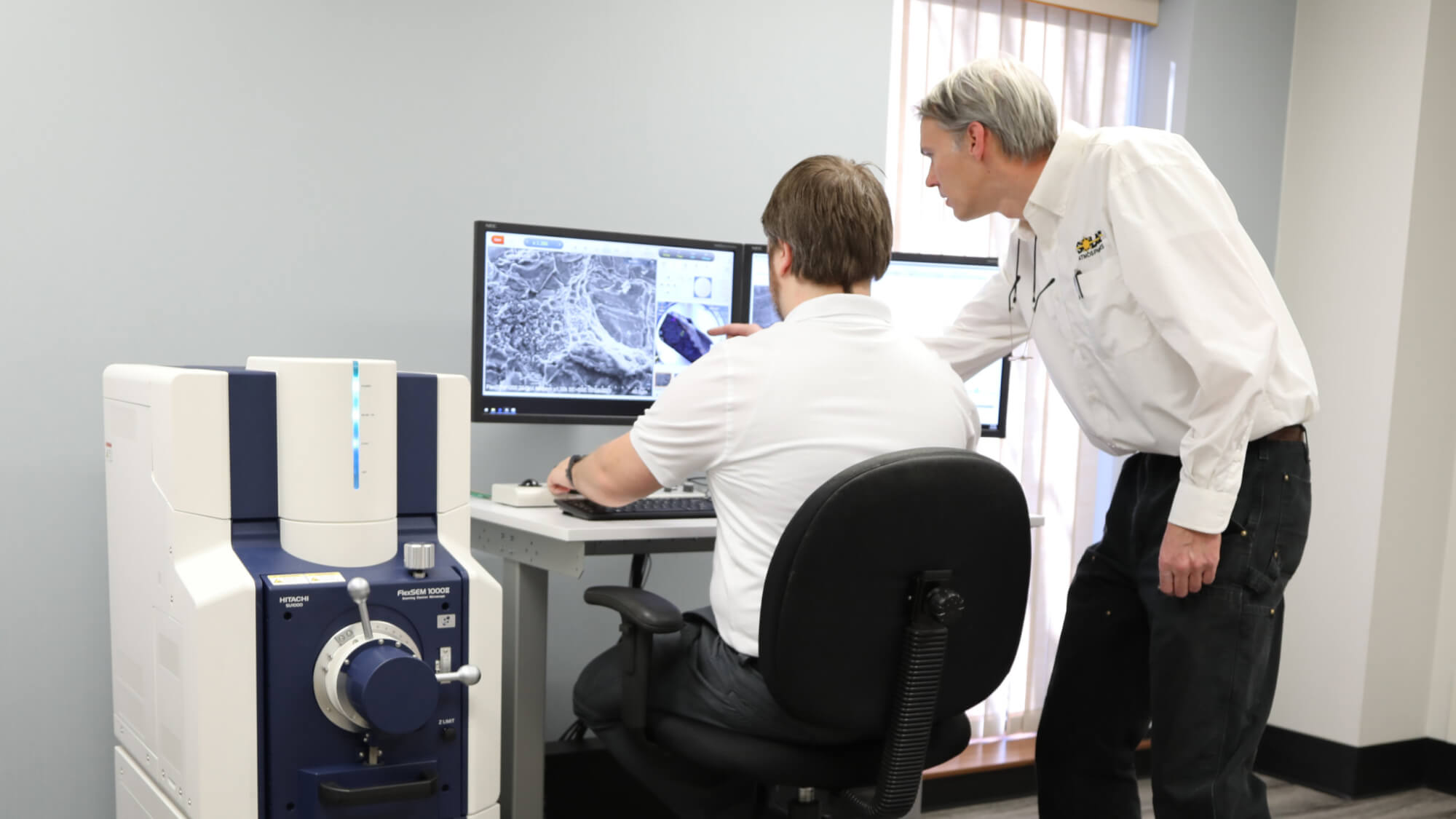
- On-site Metallurgical Test Lab, Nadcap Accredited
- Conformance to SAE specifications AMS-2759/6 for gas nitriding
- Oxynitriding – a unique process developed by Solar providing an aesthetically pleasing blackened surface appearance and improved corrosion resistance
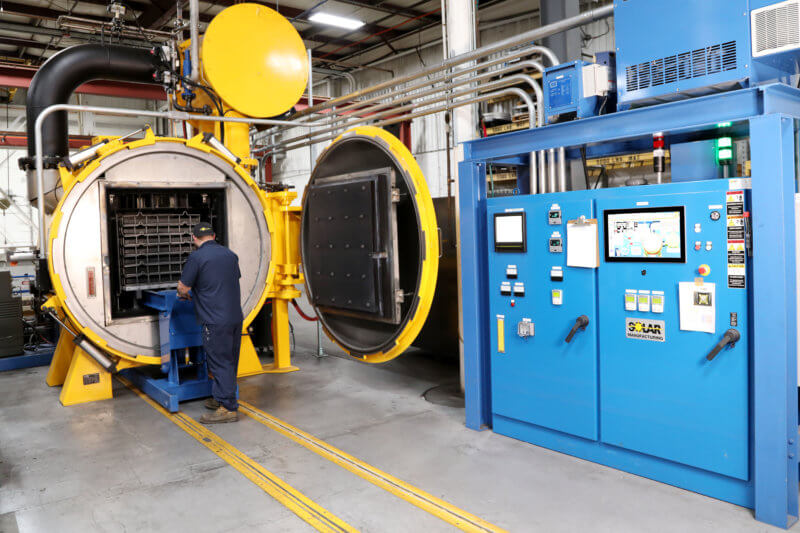
- Patented furnace design decreases nitriding cycles up to 50%
- Metallurgical R&D Team for cycle development
- Ability to mask parts
Materials Processed
- Alloy Steels
- Ultra High Strength Steels
- Specialty Steels
- Titanium Alloys
- Tool Steels
- Mold Steels

